Treasury Intl Affairs Jr. Fellowship: 2027-29 Now Open
A highly selective, fixed two-year program for new college graduates to shape international economic policy


The official announce is here. Make sure you have followed the application process and timeline.
Interview Structure
Applicants invited to interviews should expect to devote at least half an hour per office. The interview is generally conducted by an office manager (a director or deputy director) and an international economist in the office. Interview questions will cover the candidate’s background, interest in working for Treasury, responses to the application essay questions, and technical questions to evaluate analytical competency and fluency across topics in macroeconomics, development finance, and financial markets.
For instance, a candidate may be asked the following sample technical question: A country faces a dilemma as to whether to move away from a fixed exchange rate. How would you analyze the potential risks and benefits?
In both the initial application review and panel interview, interviewers are looking to assess the candidate’s technical competencies and how successful they may be in achieving the Junior Fellows job competencies as described in the Junior Fellows job description. In their responses, candidates should draw from their own academic and professional experience and cite relevant and specific examples in their responses. Candidates should be prepared to respond clearly and concisely and discuss relevant academic principles, policy implications, and real-world examples.
Candidates’ interviews are evaluated across the following broad categories:
Technical competence in macroeconomics and other IA core competencies (e.g. development finance, financial sector analysis);
At least 52 weeks of relevant experience as described in the Junior Fellows job description; and
Oral presentation and interpersonal skills.
Preparation Tips
We recommend that you prepare for the interview both by reviewing the academic concepts noted and by familiarizing yourself with current events and global economic, financial, and development challenges. The goal is to determine whether there is a match between vacancies within IA and your skills, interests, and qualifications.
Writing is a critical component of the Junior Fellow position. Application reviewers closely examine both the substantive arguments made and the clarity of the writing in the application essay questions. Essay responses are used throughout the evaluation process and shared with hiring managers. We recommend devoting sufficient time to this portion of the application. At any point throughout the interview and evaluation process, we may request additional writing samples for further assessment.
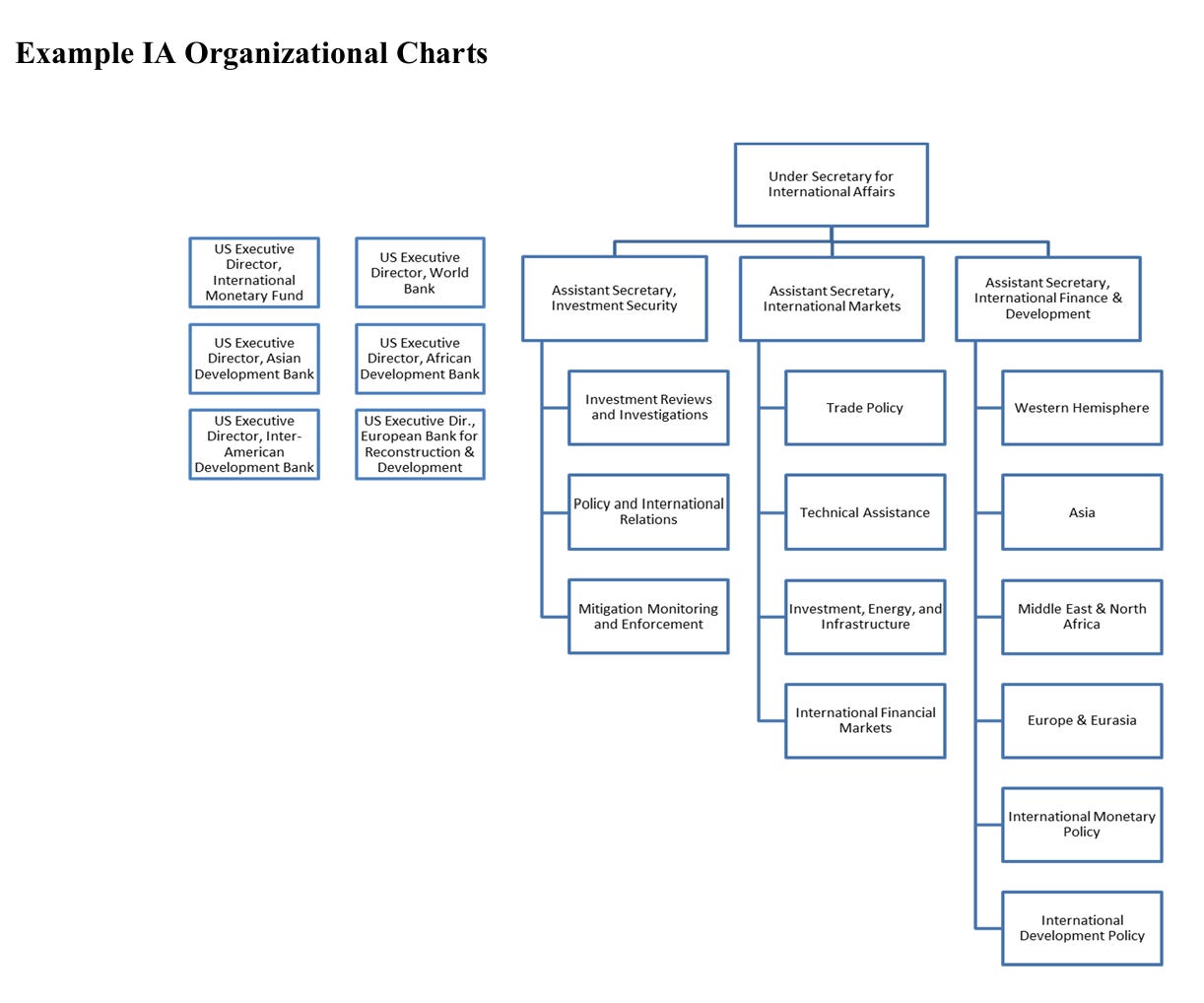
Familiarizing yourself with the organizational structure of IA for more information about different offices and their responsibilities may provide helpful background. IA is made up of both functional (e.g. Trade, International Financial Markets, etc.) and regional (Europe and Eurasia, East Asia, etc.) focused offices. Offices collaborate extensively with each other, foreign counterparts, and other U.S. Government agencies. Most offices have one Junior Fellow; as this fellowship is a 2-year rotation, not every office is hiring each cycle. Within their office, each fellow generally is responsible for a portfolio of countries or policy issues, in addition to working on projects with International Economist colleagues.
IA also includes Treasury staff working in the International Financial Institutions; U.S. Executive Directors’ offices (including at the International Monetary Fund and World Bank), technical advisors to foreign governments, and attachés in U.S. embassies. We work regularly with international counterparts and external stakeholders to engage in international economic diplomacy. Examples of IA work include representing the United States at the G7 and G20, Financial Stability Board, and other international engagements; assessing lending policy and reform priorities; managing national security reviews of foreign investments; negotiating trade and investment agreements; monitoring economic conditions abroad to anticipate and mitigate crisis; and enhancing understanding of U.S. policies to promote growth and stability. Fellows should be prepared to work independently and in teams across a range of these and other issues.